



Few design elements possess the transformative, emotional power of an authentic hand-painted textile. With its sweeping fluid graduations, active brushwork, and expressive pigment shifts, the signature Voyage Maison watercolour aesthetic does not merely decorate a room—it behaves like a live canvas installation.
However, because fluid art carries a grand visual scale and intense tonal transitions, integrating it seamlessly into everyday spaces requires deliberate architectural boundaries. Without a strategic structural frame, highly active botanical and highland patterns risk overwhelming a room layout, causing sensory clutter. To achieve a perfectly balanced, editorial-level interior, our design studio operates by a foundational principle: The Painterly Rule.
"When a fabric displays the sweeping, uninhibited motion of an artist's brush, the surrounding room elements must provide an absolute, stationary silence to let that movement breathe."
1. The 60/40 Spatial Calculation
The core of The Painterly Rule relies on a strict distribution of visual weight. To create a room that feels energetic yet fundamentally serene, allocate 40% of your visible surfaces to fluid artistry and 60% to quiet, solid neutral foundations.
Grounding Foundations
- Matte plaster, chalk, or soft stone walls
- Plain, unpatterned textured linen upholstery
- Raw timber furniture frames and natural flooring layers
- Solid architectural lines that draw the eye downward
Fluid Artistry Points
- Floor-to-ceiling watercolour statement curtains
- Grouped cluster arrangements of rich velvet scatter cushions
- Expressive, custom-printed fabric lamp shades
- Panoramic botanical accent wallcoverings
By anchoring the room with a larger percentage of solid block elements, you define clear borders for the watercolour patterns. This structural isolation creates a high-contrast environment where the brushwork is elevated to a true focal point, rather than getting lost in a sea of competing motifs.
2. Texture Isolation: The Plain Upholstery Secret
A frequent design misstep is trying to pair a multi-hued thistle or landscape cushion with a sofa fabric that contains its own subtle geometric weave or secondary pattern. This causes immediate visual friction.
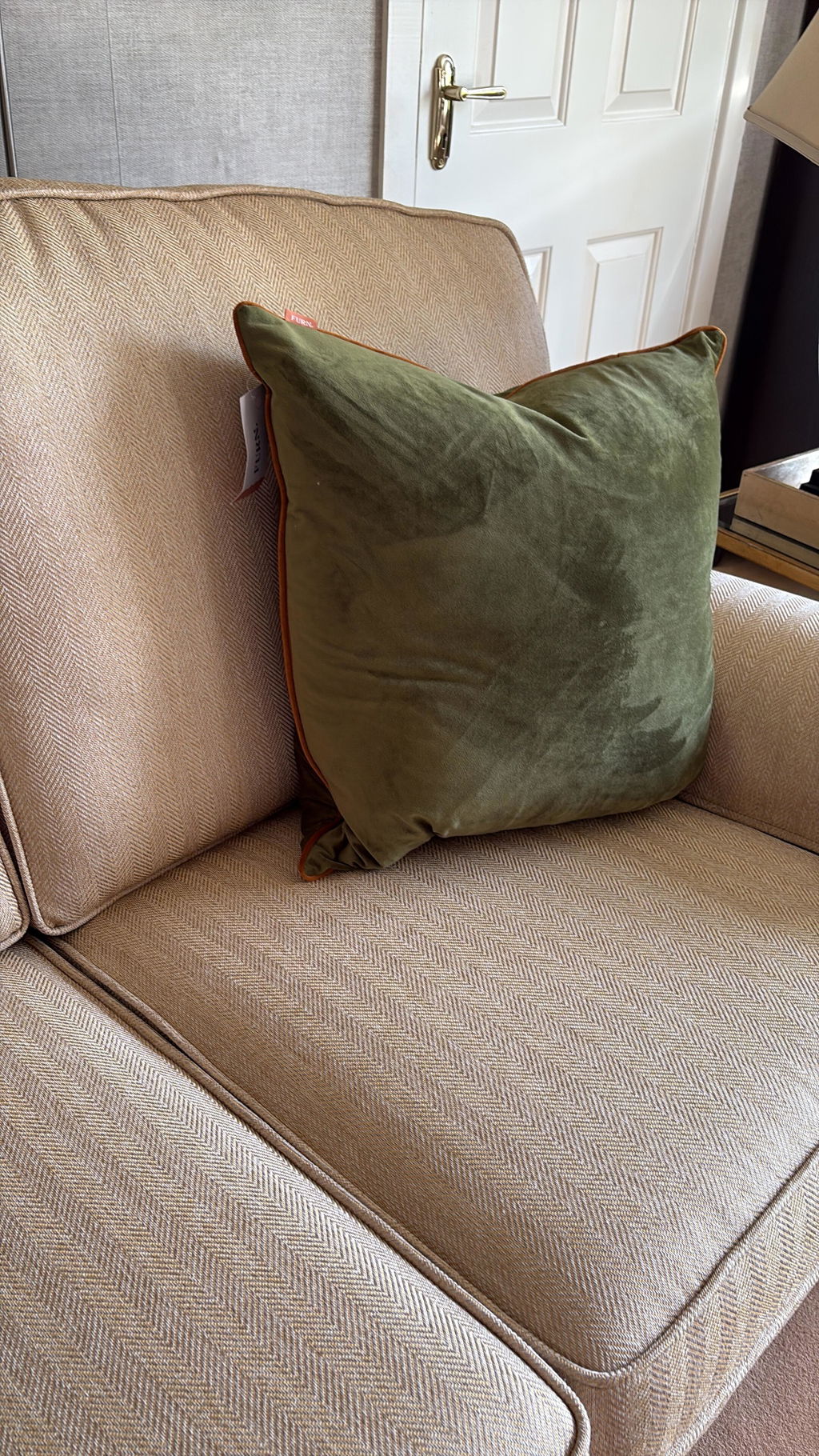
Instead, practice Texture Isolation. Place your vivid watercolour linen cushions directly against an absolutely plain, solid-colour arm sofa that emphasizes heavy, raw texture over pattern. Think deep slub linens, dense bouclés, or matte brushed cottons in shades of oatmeal, soft pumice, or muted grey. The physical depth of the plain texture absorbs light beautifully, providing a resting place for the eye while making the fluid hues of the cushion pop with striking, high-end clarity.
3. Framing Light with Fluid Transparency
Window treatments are often the most effective way to introduce Voyage Maison's grand-scale art. Ready-made cotton-linen blended drapes function beautifully because of how they manipulate natural daylight.
When daytime sun passes through a printed linen panel, it acts like a canvas back-light, illuminating the transparent watercolour layers and showing off the intricate pigment separations. To maximize this effect without darkening your living environment, frame your window using clean, solid plaster-toned walls on either side, and let the drapes cascade into soft, structured folds. Keep the underlying window treatments completely clean and structural—such as a simple neutral wood or bamboo roller blind—ensuring the painted drapes remain the undisputed star of the frame.
The Studio Blueprint: Implementing the Rule
Select your dominant Voyage Maison pattern (e.g., a signature highland landscape print) and assign it to a high-impact location like a master armchair or primary window drape pair.
Strip back surrounding surfaces. Ensure your walls, primary rugs, and largest furniture masses are strictly plain, pulling neutral tones directly out of the background weave of your artwork fabric.
Complete the space by introducing statement lighting featuring weighted ceramic bases. This balances the airy, fluid movement of the textiles with grounded physical presence.